HOW
Moulds, then plaster
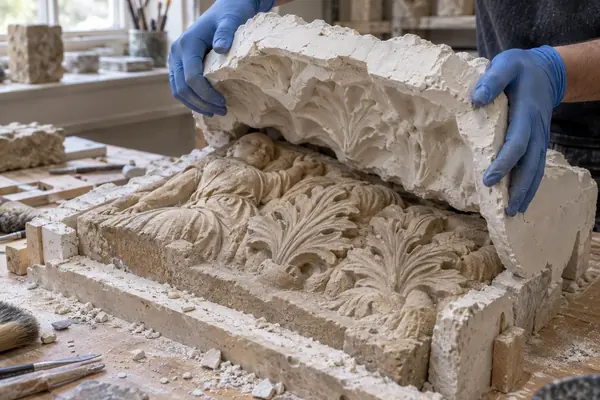
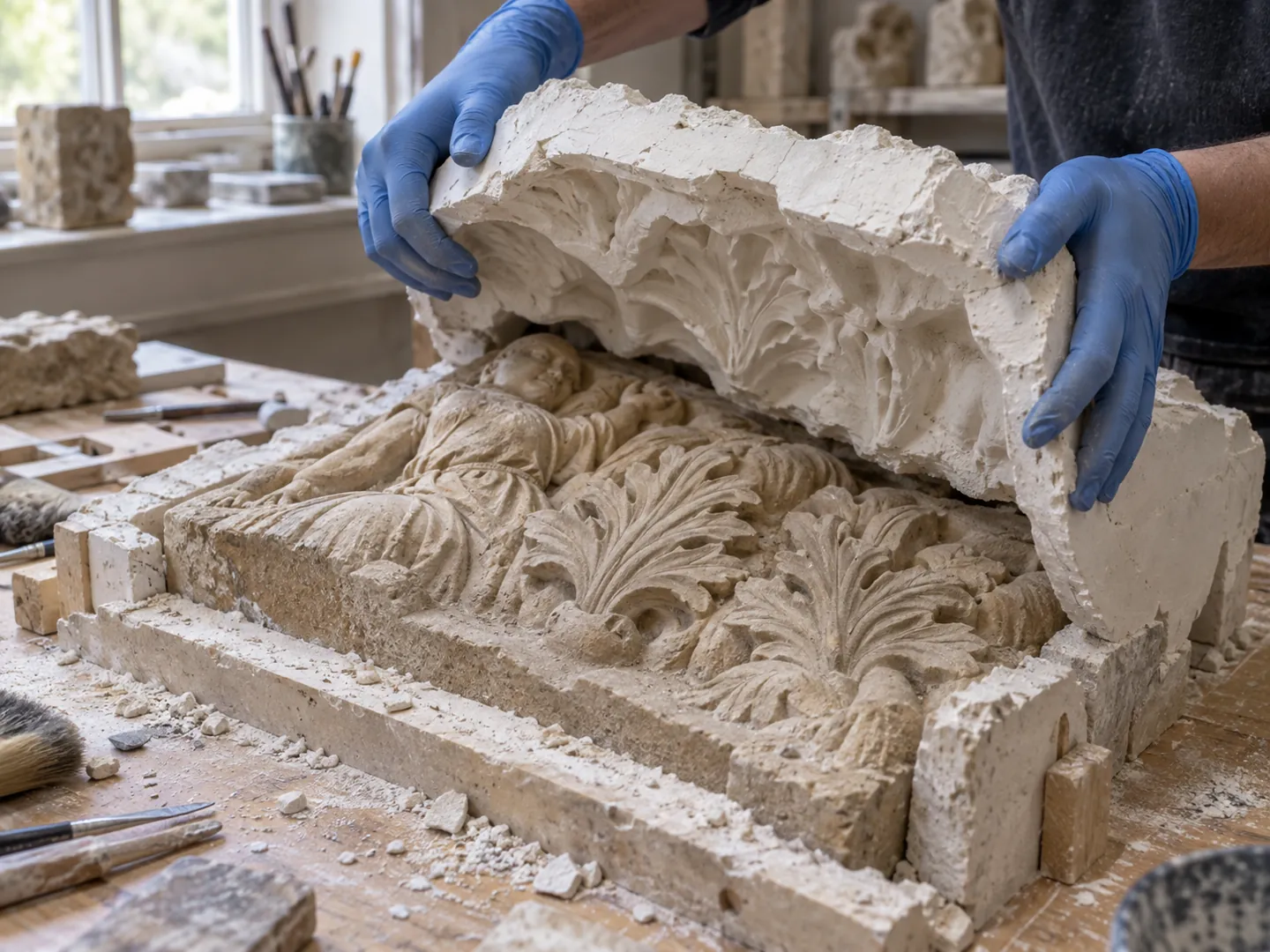
Plaster moulds are laid on the original, removed, cased and filled with wet plaster. The pieces are then assembled and finished into a full copy.
How a cast is made doodlereplicas
A SHORT HISTORY
Some of the best-loved objects in British museums are copies.
Pick a cast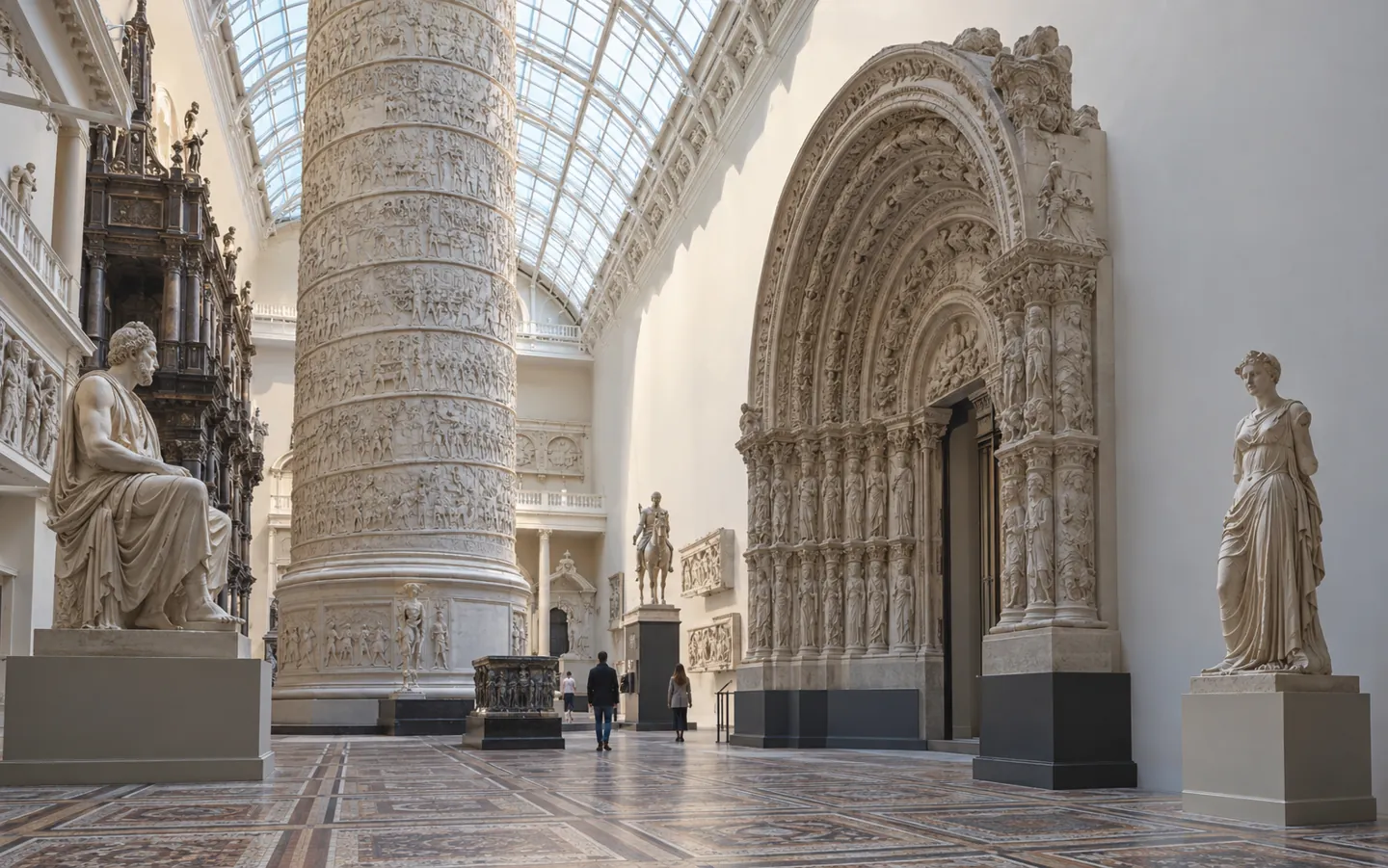
PLASTERa faithful copy
In the 19th century, museums filled vast galleries with plaster casts of the world's great sculpture and buildings so that people who could not travel could study them. Many of those copies now show details the originals have lost.
Updated
THE SHORT ANSWER
Victorian museums collected casts to teach design.
Today some are the best record of the original.
HOW
Plaster moulds are laid on the original, removed, cased and filled with wet plaster. The pieces are then assembled and finished into a full copy.
How a cast is madeWHY
When the V&A was founded in 1852, casts were an essential part of the collection, regarded as 'superior to drawings' for students.
Read onNOW
Some casts show details lost on the original to poor restoration, pollution or weathering. A few are the only record of a destroyed work.
See the numbersPICK A CAST
Pick one of the famous casts in the V&A's Cast Courts in London. The bar shows its height compared with the others.
Heights and dates from the V&A's own pages on its cast collection.
TWO NUMBERS WORTH KNOWING
The courts were built for one copy,
and it still did not fit in one piece.
35 m
Height of the plaster copy
Napoleon III had a mould taken of the Roman column in the early 1860s. The South Kensington Museum bought a set of plaster casts in 1864.
TRAJAN'S COLUMN · V&A
25 m
Height of the galleries built for it
The Architectural Courts, opened in 1873, were built to fit the column, but only high enough to show it in two sections.
CAST COURTS · V&A
A 1928 report to the V&A's Advisory Council proposed getting rid of the whole cast collection. The advice was disregarded, and the V&A says similar collections elsewhere in Europe have since been destroyed or dispersed.
FROM ORIGINAL TO COPY
This is how the V&A describes the making of its 19th-century casts.
Several plaster moulds are placed on the surface of the original and left to harden.
The moulds are removed and enclosed in an outer casing that holds them in shape.
The inside is coated with a separating agent so the copy will release, then wet plaster is poured in.
Once set, the pieces are put together and the joints and surfaces finished to make a complete copy.
WHY COPIES MATTERED
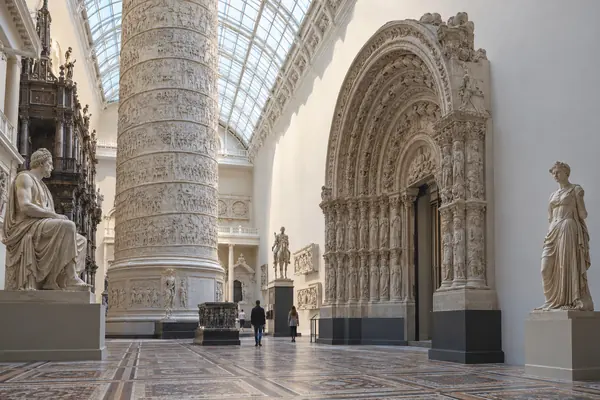
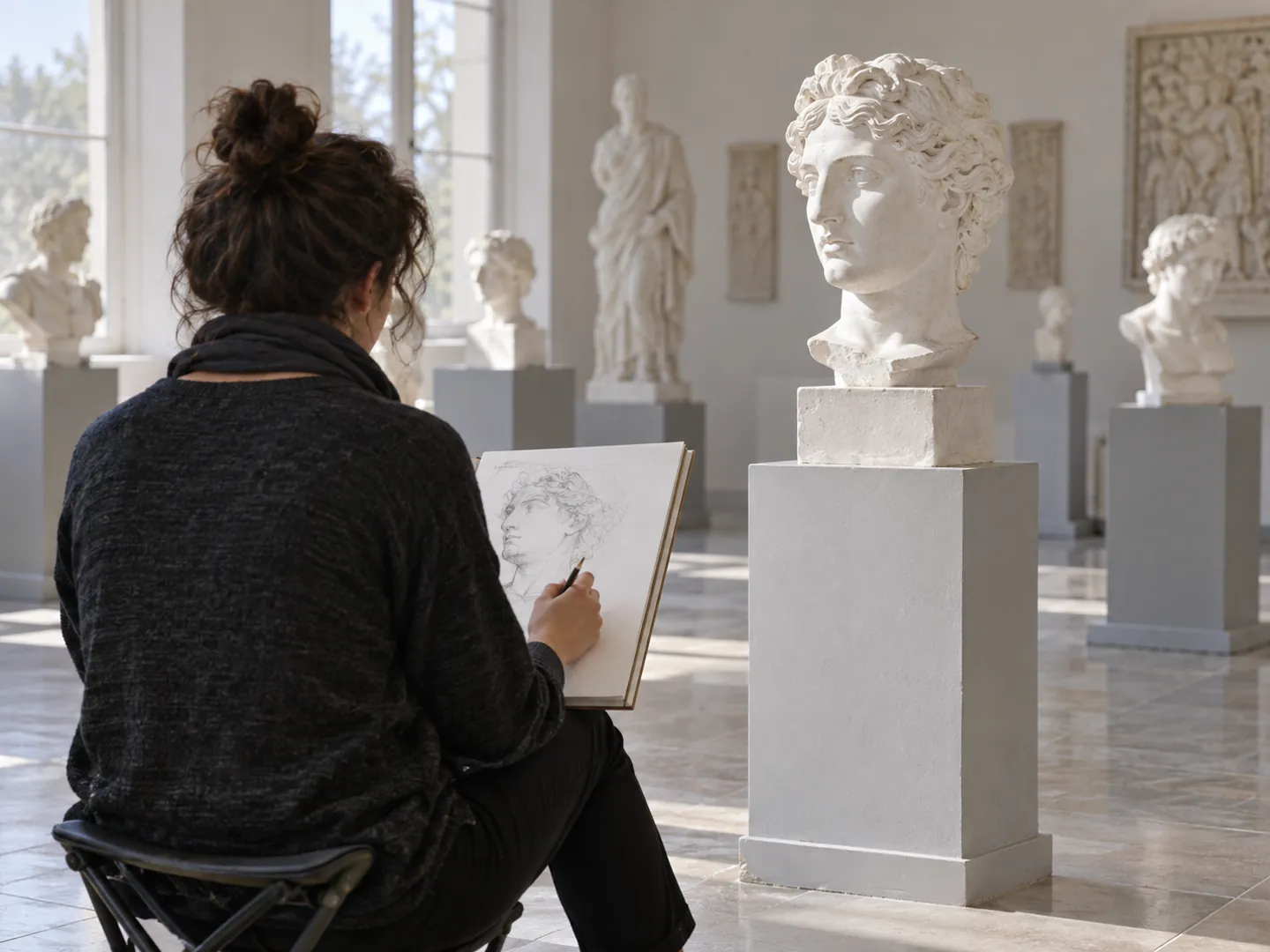
The V&A says that at a time when travel was difficult, the Cast Courts brought art and architecture from around the globe together under one roof. For Londoners who could not travel abroad, the casts were a glimpse of European sculpture.
Casts are being used for teaching again because they give a sense of scale and three dimensions that no photograph can. In Cambridge, the Museum of Classical Archaeology holds one of the largest plaster cast collections in the world, of Greek and Roman sculpture, and entry is free.
Questions
Not in the sense of a forgery. A cast is a reproduction made from moulds taken from the original. Museums like the V&A collected them to let students and visitors study works they could not see in person.
The V&A says Queen Victoria was shocked by the cast's nudity and asked for a fig leaf to be made, which was hung on the cast with hooks when dignitaries visited. The plaster fig leaf is now a popular exhibit.
Sometimes. The V&A says some casts show details no longer visible on the original because of poor restoration, pollution or weathering, and in a few cases the original has been destroyed.
A metal copy made in a mould. Trajan's Column was first copied as an electrotype in pieces from Napoleon III's mould, and the plaster casts were then made from that metal copy.
The V&A Cast Courts in South Kensington display copies including David and Trajan's Column. Cambridge's Museum of Classical Archaeology has one of the world's largest cast collections of Greek and Roman sculpture.
ABOUT THIS NAME
doodlereplicas.com is part of the DoodleSale portfolio. It isn't in an auction right now, but you can ask about leasing it.